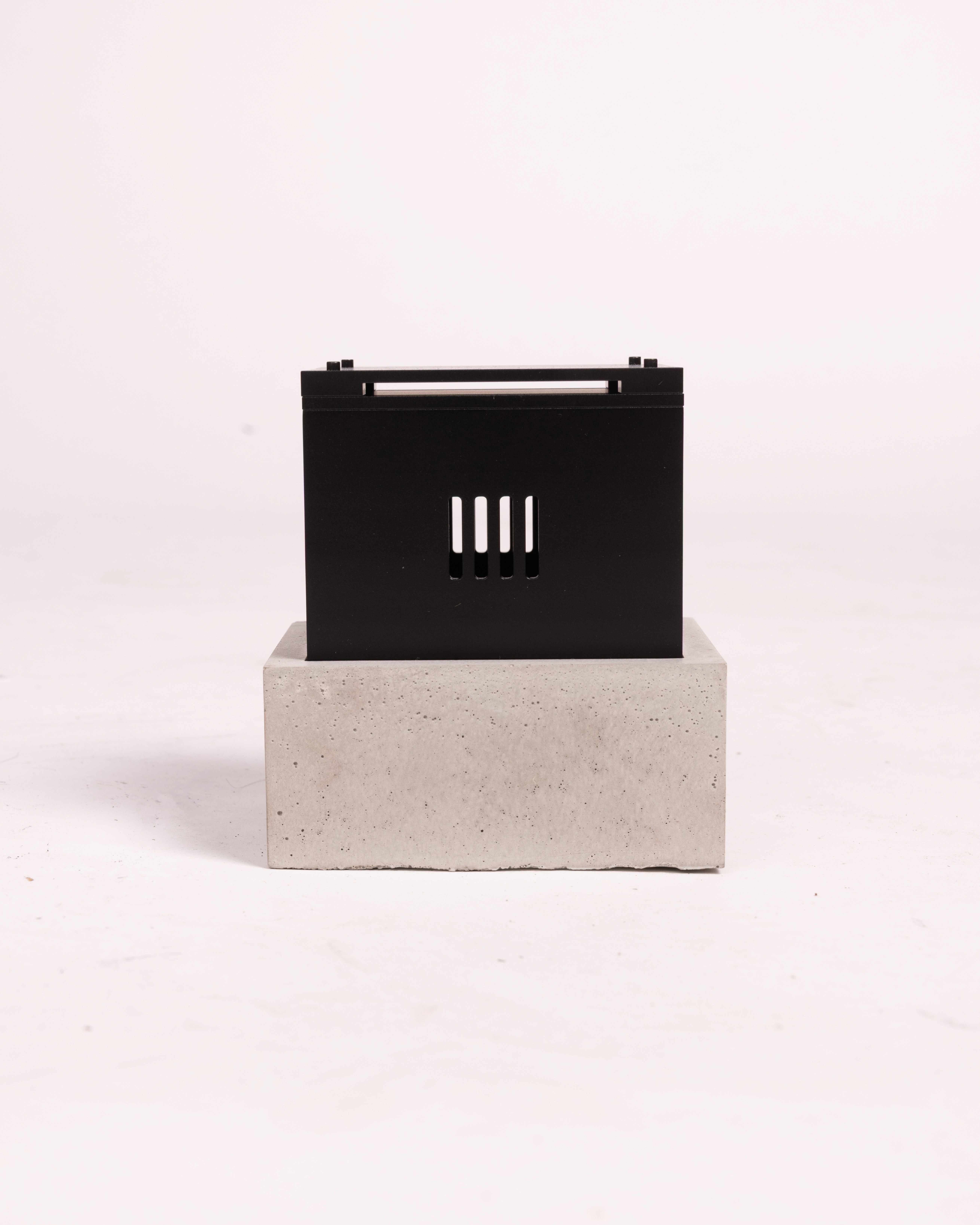
ATLANTIS INCENSE BURNER
[INQUIRE]
The base was made out of cement, casted into a silicone mold. The base consists of cement mixed with carbon fiber and color pigments. The top is 3 pieces of CNC’d aluminum which is then sand-blasted and anodized to achieve the matte black and silver finishes.
MATERIAL
ANODIZED ALUMINUM
CONCRETE
DIMENSIONS
17L 13.75W 28H
Our grandmother kept an Atlantis Ring. Small, ancient, with a geometry people have argued about for centuries. As kids we played with it, laughed at the stories she told about it. We didn't get it. It stayed with us anyway. The way things you don't fully understand tend to.
Before covid she moved in with us, she used to live in Italy. Naturally being around her more, we started paying attention. We can't tell you exactly what shifted but we stopped dismissing what we couldn't explain and started respecting it instead. The ring was found in the Valley of the Kings in 1860. Over 4,000 years old. What makes it remarkable isn't the age, it's the geometry. A repeating sequence of pyramidal forms carved with real precision. The Egyptians used geometry as a functional language. These shapes weren't decoration. They were believed to concentrate and neutralize energy. A portable tool for stillness. For arriving at yourself.
The incense burner takes inspiration from that directly. It's a cube of blackened steel on a cast concrete plinth. The lid frames a pyramid. Six pyramidal references across the whole object pulled straight from the ring's sequence of forms.
The materials aren't accidental. Raw concrete and blackened steel don't soften themselves for you. They're honest about what they are. The blackened finish isn't paint — it's what the metal went through. You see the process, not a cover-up of it. There's no performance in these materials. They just ask you to show up the same way.
The object does nothing until you light it. You bring the incense, the flame, the smoke. The metal just holds the geometry and waits.
Our mother lit incense at the end of dinner every night. Not a big ritual — just a way of winding the day down, closing a chapter. We absorbed that without realizing it. Now we do the same thing. Before we sit down to listen. Before we design. Before we read. It marks the beginning of something. Tells the body we're crossing into a different kind of attention.
That's what this is for. Not decoration. A threshold. You light it, and whatever you were doing before becomes something else.
BY THE CONTI TWINS